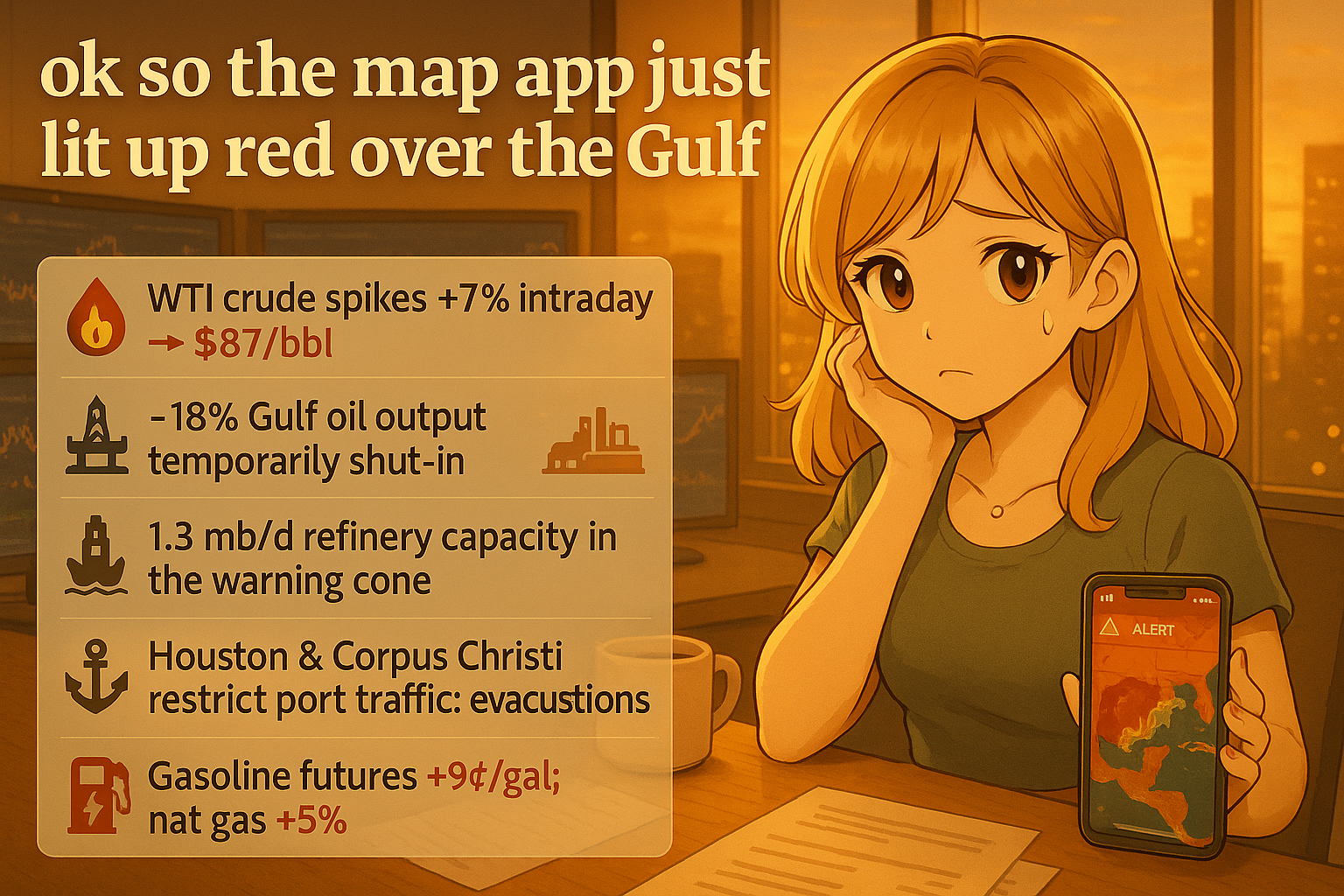
ok so the map app just lit up red over the Gulf 🚨
and emerging markets felt it before Wall Street even finished its morning latte. let me break down what’s happening because this one actually matters — and the ripple effects are going to touch more than just oil traders.
what went down on February 28
coordinated U.S.–Israel strikes hit targets inside Iran. we’re talking military installations, suspected drone facilities, and infrastructure tied to their nuclear program. Tehran answered with missiles and drones aimed at Israel and Gulf states hosting U.S. bases. several countries shut their airspace almost immediately, which means Europe–Asia flights are now scrambling for detours ✈️ airlines are literally redrawing routes in real time.
here’s the number that matters: roughly 20% of the world’s oil squeezes through the Strait of Hormuz (that narrow chokepoint between Iran and the Arabian Peninsula). traders are pricing in a $5–$10 per barrel fear premium — basically the “oh no” tax markets add when geopolitics get spicy. and this chokepoint isn’t just about crude — liquefied natural gas shipments pass through there too, which matters for Asian energy markets.
why emerging markets get hit first
three-step backstory:
→ years of energy sanctions already squeezed global supply routes
→ on-again off-again nuclear talks kept a lid on Iranian exports
→ proxy conflicts normalized risk… until a direct strike blew the ceiling off
energy makes up a bigger slice of inflation baskets across EM countries. and many import most of their crude — India brings in about 85% of its oil, for example. Turkey imports around 93%. these nations don’t have the luxury of domestic shale production to fall back on. rerouted flights burn more jet fuel too, which nudges up transport and food logistics costs across the board.
real talk: if Brent climbs $5, gas prices in the U.S. typically follow by around $0.10–$0.15 per gallon within a few weeks. delivery fees and flight prices? they’ll quietly creep up too. your grocery bill feels it eventually.
one indicator to watch
CDS — credit default swaps. think of it as the insurance price on a country’s IOUs. if those spreads jump while the currency weakens at the same time? that’s stress talking. it’s a little-known tell but it’s reliable. right now I’m watching Turkey, Egypt, and Pakistan closely — their CDS spreads were already elevated before this weekend.
what’s next
key window is the next 24–72 hours. watching for: airspace reopening, any infrastructure damage reports, and whether OPEC+ (the oil producer club) or the IEA (the energy data agency) makes any moves. Saudi Arabia’s response will be particularly telling.
my take: resilience will come down to reserves (a country’s foreign currency savings), dollar-denominated debts, and subsidy math — basically who can keep buses running without torching their currency.
before you scroll: markets panic for a living. we don’t have to. deep breath, watch the data.
want the full breakdown with Monday’s watchlist? it’s on Medium → https://medium.com/@erinamarkets
📌 not financial advice, just your fav market girl connecting the dots in real time.

Comments